Sri Lanka Travel Visa

Showing posts with label tourist visa sri lanka. Show all posts

Tuesday, 5 March 2019

Sri Lanka being promoted as best destination for film shooting


Sri Lanka is being promoted as the best destination for film shooting.
The Sri Lanka Consulate General in Mumbai arranged an exclusive discussion between ‘Dharma Productions’, the largest film production house in Mumbai and the Sri Lanka Film Tourism delegation on 23 February 2019 in Mumbai.
The Sri Lanka Film Tourism delegation comprising a representative from the Sri Lanka Tourism Promotion Bureau (SLTPB) and six film producers including the veteran film producer, Chandran Rutnam participated at the ‘India International Film Tourism Conclave (IIFTC) 2019 held in Mumbai from 21-23 February 2019.
Presenting an award at the IIFTC to Malayalam film which was shot in Sri Lanka, Consul General Chamari Rodrigo invited Indian film producers to Sri Lanka for film shooting as the island has been a popular film shooting location for a number of notable Hollywood movies since 1950s.
India, which is the world’s largest film industry, produces nearly 2000 films annually. Fiji, Switzerland, Japan, Chez Republic, Norway and Sweden are the popular film shooting destinations among Indian film production houses.
The Sri Lanka Consulate General initiated smaller group discussions with the Indian film production houses to promote Sri Lanka as the best destination for film shooting, given the geographical proximity, exotic and diverse locations in a small island and the lower production cost.
Eleven leading film production houses representing Bollywood and South Indian film industry had 3 separate fruitful discussions with the Sri Lanka delegation at the Consulate General and J W Marriot hotel in Mumbai on 21& 23 February 2019 respectively.

Thursday, 21 February 2019

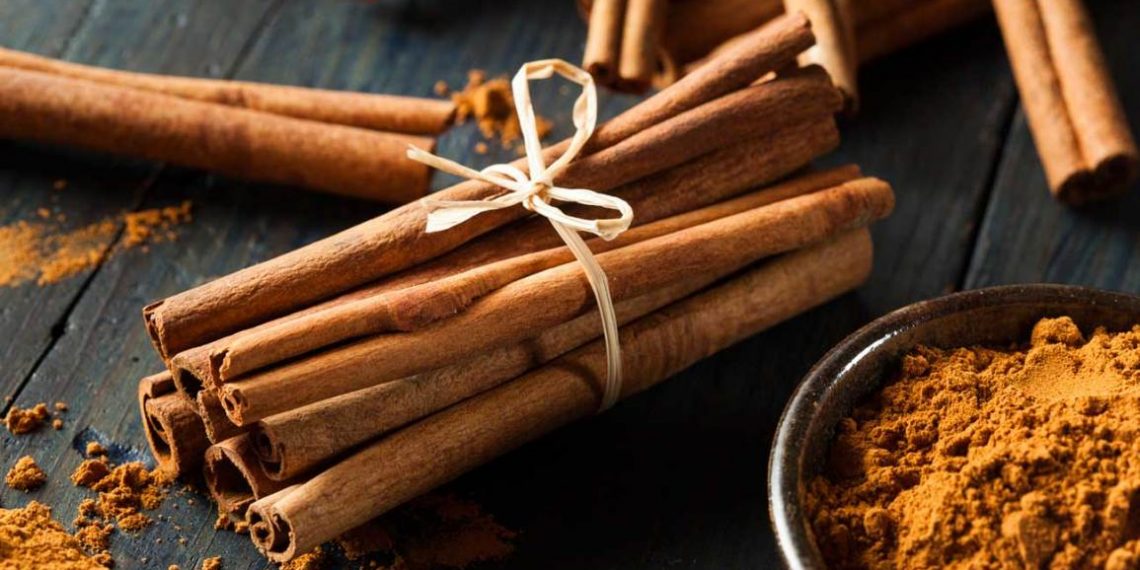
Sri Lankan spices to enter new global markets in 2019

Sri Lankan spices to enter new global markets in 2019


Colombo, Feb 19 – Sri Lanka’s lucrative spice industry is targeting a revenue of US 500 million dollars in 2019 following its entry into new global markets as well as increasing exports of pepper, cloves, and nutmeg, local media reported Tuesday.
To achieve this target, the spice industry aims to export Sri Lanka’s popular cinnamon, pepper, nutmeg, and cloves, to new markets such as Russia, Uzbekistan, and Kazakhstan this year, former Spice Council Chairman, Nanda Kohona told the local Daily FT, on the sidelines of the launching ceremony of the Global Spice Road Symposium.
According to Sri Lanka’s Central Bank, spices earned 330.3 million dollars in the first 11 months of 2018 but this was a 11.6 percent drop when compared to the same period in 2017.
In November alone, spice earnings dropped to 27.7 million dollars from 33.7 million dollars, which is a reduction
of 17.7 percent from 2017.
“Most of our cinnamon is exported to Mexico and South American countries, and a fair percentage goes to the European Union. We’re looking at new markets like Russia, Uzbekistan, and Kazakhstan, which are coming up now and looking for spices from Sri Lanka. The demand is not only for cinnamon but pepper, cloves and nutmeg as well,” Kohona said.
Cinnamon is the highest income earner for Sri Lanka’s spice sector followed by pepper.
Sri Lanka producers about 17,000 metric tons of cinnamon and 35,000 metric tons of pepper per year.
The spice industry expects production to recover on better weather conditions this year.

Tuesday, 19 February 2019

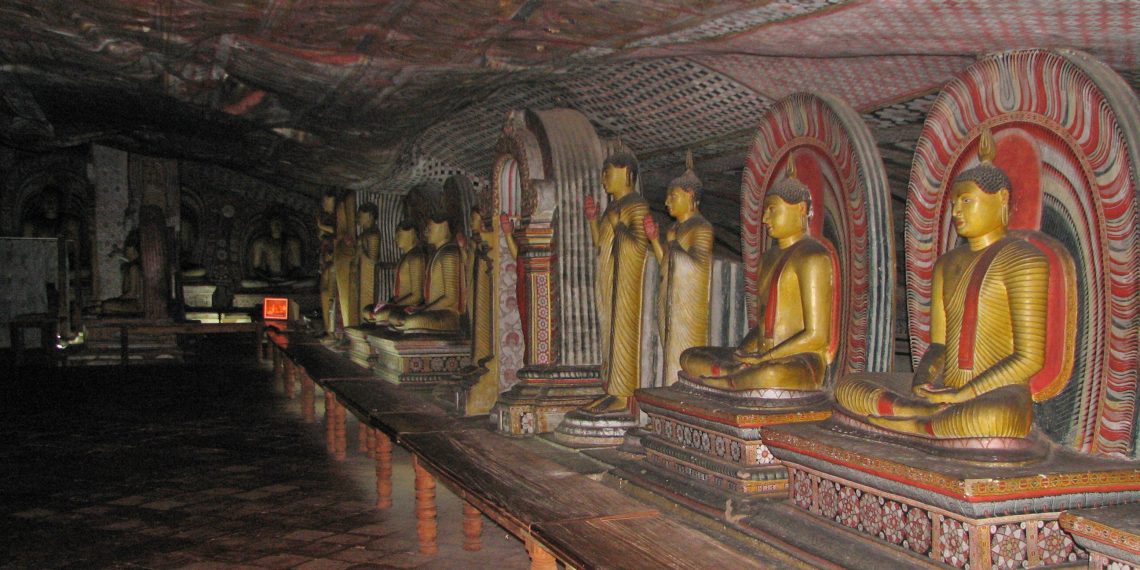
Sri Lanka to promote Buddhist Tourism Trail to attract tourists from Thailand

Sri Lanka to promote Buddhist Tourism Trail to attract tourists from Thailand


Colombo, Feb 19 (newsin.asia) – Sri Lanka’s Tourism Promotion Bureau has introduced a ‘Buddhism Tourism Trail’, a promotional website aiming to attract tourists from Thailand and other Theravada Buddhism countries, local media reported Tuesday.
Kshenuka Senewiratne, Sri Lanka’s ambassador to Thailand told the Bangkok Post the website was launched at the Thai International Travel Fair (TITF) held recently as about 90 percent of Thais were Theravada Buddhists.


Theravada known as Southern Buddhism is the oldest branch of Buddhism. It focuses on the teachings of the Lord Buddha through strict meditation and the eight fold path to enlightenment with the majority of followers in Sri Lanka, Thailand, Laos, Cambodia, and Myanmar.
Kshenuka said the website will focus on Buddhist tourist attractions such as ancient temples, Buddha statues and meditation centers in Sri Lanka.
For example, she said the Temple of the Sacred Tooth Relic in the central highlands of Kandy, a resting place for Lord Buddha’s tooth allegedly saved from his funeral pyre is a popular destination for many Buddhist and foreign tourists.
Sri Lanka, has in recent years transformed into a popular tourist destination with the highest number of tourists arriving from China, India and Britain.

Sunday, 17 February 2019

Once war-torn, Sri Lanka embraces tourists, from luxury travellers to backpackers

New_xx-0119-lanka2.jpg


Waves cartwheel onto a secluded beach, funnelling into a mangrove-fringed stream and gently pushing a boat in which a fisherman named Ranji carries the catch of the day.

Ranji, who has been fishing the waters off the south coast of Sri Lanka for the past 30 years, sets off every day at 3 a.m. and typically returns with a boat heavy with fish.

When he shows up with the bounty at Anantara Peace Haven Resort Tangalle, his biggest customer, a bell sounds, a simple testament to his hard work.

Ranji proffers a leaf-bottomed straw basket and we select a white mullet and a red-speckled grouper. The fish will soon be delicately deboned, marinated and presented as the main dish in a four-course lunch, served in a thatched-roof treehouse flanked by the stream and a rice-paddy field.
In an open-air kitchen, executive chef Chimanda Pathirana and his team prepare a fresh eggplant salad and beet carpaccio made from ingredients picked moments earlier from the sprawling organic vegetable garden.
lanka9006193.jpg
Executive chef Chimanda Pathirana picks vegetables for lunch from Anatara Peace Haven Resort Tangalle's organic garden. - Katie DeRosa, Times Colonist
This is the Harvest Table experience, the latest culinary invention of Anantara’s Peace Haven, located on a stretch of unspoiled coastline at the southern tip of Sri Lanka.
The three-year-old resort unfolds over 42 acres of a tropical coconut plantation, which is why the humble coconut features prominently during our stay. Coconut water is served from a smooth coconut shell upon arrival, which is also marked by a welcome drum ceremony performed by three traditional singers.
We’re flanked by a coastline that is part craggy cliffside, where the waves crash like shattered glass, and part golden beach, which looks ripped from a desert-island film.
Tangalle, which means “projected rock” in Sinhalese, is halfway between the colonial fort city of Galle and Yala National Park, the country’s largest national park, where leopards roam amid the elephants.
New_xx-0119-lanka6.jpg
The Anantara Peace Haven Resort Tangalle opened on Sri Lanka's pristine south coast in December 2016. - Katie DeRosa, Times Colonist
As we had bounced in the back of a tuk tuk — a small three-wheeled vehicle used as a taxi — between the more populated beach towns of Unawatuna and Mirissa en route to Tangalle, the sheer force of the Indian Ocean was omnipresent. It’s a constant reminder of the devastating tsunami on Boxing Day 2004 that killed more than 30,000 people.
Nilanka, an industrious 20-something tuk tuk driver from Unawatuna, was away in Kandy the day a 9.1-magnitude earthquake pushed a towering wave onto his hometown. It was weeks before he found out that his mother, father and brother had been killed, their humble residence destroyed. His tuk tuk, his source of livelihood, was also swept away by the wave. A friend living in Italy helped him raise the money for a Piaggio, which is kind of like the Mercedes of tuk tuks.
The wave indiscriminately wiped out coastal homes and businesses, but Nilanka said an influx of tourist dollars helped many residents who struggled to rebuild in the immediate aftermath.
• • •
Sri Lanka attracted 2.1 million visitors last year, a record for a country that just over a decade ago, was still locked in a brutal civil war.
The Tourism Development Authority hopes to double that by 2020, something Dilan Bandara, manager of Anantara Tangalle, believes is more than achievable.
Travel bible Lonely Planet has named Sri Lanka the best country in the world to visit in 2019. In anticipation of a tourist influx, global hotel chains are clambering to open new properties across the country and villagers are converting their homes into tourist guesthouses.
Bandara is confident Sri Lanka will outpace Bali as a destination for beaches, surfing and trekking. He’s speaking in the lounge of the resort’s cliffside restaurant, Il Mare, as we sip cocktails of smoked arrack, a whisky distilled from the sap of a coconut flower, flavoured with fresh pineapple juice and passionfruit.
Bandara, a native of Tangalle, says a new highway under construction will shorten the journey from Colombo to Tangalle, which he hopes will increase visitors to Tangalle’s beaches.
New_xx-0119-lanka4.jpg
Elephants graze in Udawalawe National Park, which covers about 310 square kilometres in Sri Lanka. - Katie DeRosa, Times Colonist
Sri Lanka’s attraction is its incredible biodiversity, Bandara says. “You can travel 1.5 hours out to sea, you’ll see the blue whale, the biggest creature in the sea. You travel 1.5 hours north, into the jungle, and you can see elephants, the biggest mammals on land.”
We take a walk with Anantara’s nature guru, Eddie, a binocular clad computer-scientist-turned-biologist with an encyclopedic knowledge of the country’s wildlife. He points out a monitor lizard, chameleons, langur monkeys, Indian Palm squirrels and dozens of species of dragonflies. Hanging out on the beach at the right time of day might afford you a glimpse of adorable baby turtles migrating from their sandy nesting areas to the sea. Anantara has partnered with the International Union for Conservation of Nature Sri Lanka to protect these globally threatened marine species.
We do catch a glimpse of the famed resident porcupine, which freezes us in our seats as she casually ambles by our dinner table one night, hovering next to my husband’s leg, her quills extended upward. We make no sudden movements and eventually she carries on, quills firmly in place.
• • • 
For a chance to see wildlife outside the comforts of the resort, we drive an hour and a half north of Tangalle, where Udawalawe National Park promises the opportunity to witness the humble majesty of elephants. We set out in the safari jeep before 6 a.m., just in time to catch a cotton-candy sunrise that tints the arid landscape a soft pink.
We pay our entrance fee to the national park ($88 Cdn for two people) and cast our eyes out over the expanse. Our driver, Predeep, a fresh-faced 21-year-old with a lead foot, points out pelicans, toucans, a painted stork, crested hawk eagles, egrets, jackals and foxes.
He gets a call on his mobile phone and catapults us forward, the jeep tipping back and forth over the potholed dirt roads. “Group of elephants,” he calls out, so we know what all the fuss is about.
After a few brisk turns and wading through waterlogged trenches I fear might swamp the jeep, we reach a herd of female elephants and their babies. They pay little attention to the swarm of safari jeeps, casually picking up grass with their trunks and shoveling it into their mouths.
Just before we exit the park, Predeep suddenly reverses the jeep down the bumpy dirt path, which confuses us until we see a large male elephant emerge from the bushes and stomp casually toward our vehicle, before making a turn to amble down the road.
Predeep says we are lucky to spot the massive bull. The experience of letting him come to us feels less intrusive than the pack of jeeps that surrounded the female herd.
The day after the safari, we pack our bags and head for Ella, a village in the hill country best known for the colonial-era Nine Arch Bridge. Our lodging is at the Ella Hide View, a family-run guest house accessed by a steep winding road that almost defeats a battered, suitcase-laden tuk tuk.
New_xx-0119-lanka3.jpg
A train crosses the Nine Arch Bridge near Ella. The town is about 200 kilometres east of Colombo, Sri Lanka's capital. - Katie DeRosa, Times Colonist
The accommodation is humble but the main draw is, as the name suggests, the view. The entire guest house perches on the side of a hill, looking out onto the Little Ravana waterfall and a velvety green valley called the Ella Gap.
From the two hanging wicker chairs on our room’s balcony, we watch sunrises, torrential rains, thunderstorms and rainbows. It’s October, near the end of the country’s monsoon season, but the rains are hard, fast and predictable, making it easy to avoid getting drenched.
Our routine for the four days in Ella works like this: Up at sunrise, an early breakfast to fuel trekking, and exploring the town until about noon. At that point, it’s a smart idea to tuck into a local café or head back to the guesthouse before the rain buckets down.
At night, with no light pollution, the hills become a blackened mystery, a darkness that amplifies the cacophony of jungle sounds, the rhythmic buzzing of cicadas and the chirp of crickets.
New_xx-0119-lanka5.jpg
A view of Ella Rock during a trek through the hill country. - Katie DeRosa, Times Colonist
The main village is easily accessible via a set of concrete stairs (easier going down than up) and a five-minute walk down the railroad tracks, which, despite being well-used by passenger and cargo trains, double as a sidewalk for locals and brave tourists.
The walk to the village leads us past humble homes in various states of construction. Dumidu Sampath, whose family opened the guest house four years ago, says there’s a flurry of building as many villagers convert living spaces into guest houses to accommodate the crush of tourists. The industriousness has created tension in the neighbourhood, Sampath says, with some frustrated that their quiet lifestyle is being opened up to camera-toting backpackers.
“It’s good for the economic side, but for neighbours…” says Sampath, rubbing his fists together in a sign of friction.
Ranjith Peris, the 30-something manager at a hip café called Starbeans, a riff on Starbucks, looks at travellers sipping lattes while paging through Sri Lanka travel guides.

Saturday, 16 February 2019

Sri Lanka awaits nod for delayed tourism zones


Sri Lanka is keeping its hopes alive to create tourism zones in Dedduwa, Kuchchaveli and Kalpitiya, with final discussions expected to be held this week, a top official said.

"We have to wait for a policy decision from the cabinet," Sri Lanka Tourism Development Authority (SLTDA) Director General Upali Ratnayake said.

"We will have the final discussion tomorrow after which we will prepare a cabinet paper to be forwarded," he said on February 06.

Ratnayake said a decision has to be taken on how the lands would be allocated for investors.

The Dedduwa project will take up to 1,800 hectares, according to the SLTDA website.

Kuchchaveli Beach Resort, on the country's North East coast was to take up 445 acres. Earlier plans envisaged leasing land to investors for 99 years.

The Kalpitiya Dutch Bay Resort project was to give investors access to 14 islands, totalling 4,133.2 acres.

However, the projects have faced delays over the past years.

Two tourism zones in Passikudah and Yala were completed successfully, Ratnayake said. (Colombo/Feb07/2019 - SB)


Source

Wednesday, 13 February 2019

Sri Lanka tourist arrivals grows 2.2% in Jan.


 Dirty sewage threatens Sri Lanka’s golden beaches


Colombo, Feb 12 (newsin.asia) – Tourist arrivals to Sri Lanka grew 2.2 percent in January compared to the same period last year with the arrival of 244,239 tourists, statistics from the Sri Lanka Tourism Development Authority showed here Tuesday.
The leading markets for Sri Lanka tourism were India, China and Britain.
China accounted for 11 percent of the total traffic, while India accounted for 16 percent and Britain also 11 percent.
This year, the Sri Lankan government has set a target to attract 3 million tourists with an earning of 5 billion US dollars.
In 2018, Sri Lanka welcomed 2,333,796 visitors, up 10.3 percent from a year earlier.

Thursday, 6 July 2017

Things to do and see in Kurunegala of Sri Lanka

Sri Lanka is the best place to spend the summer or winter vacation. Whether going with family or alone everyone will love this place. I love going off the pitch type of beaten track on my travels which probably explains why the town of Kurunegala in Sri Lanka ranks highly with me.  Despite this not being on the normal tourist route or trail, I enjoyed a lot the town and fun which are few cool things to do in Kurunegala. Kurunegala is a small town in Sri Lanka that bereft of the tourist vibe and other parts of Sri Lanka seem to celebrate in. Kurunegala is slightly more smoky and raw, yet peaceful and relaxing. There is a quiet lake that is accompanied by busy rush hour traffic in this town and hidden in the valleys of Sri Lanka. It also acts as an interchange station between Dambula and Colombo.  Every year tourist from different countries makes their Sri Lanka ETA visa and travel to Kurunegala. We all know their so many places to experience in Sri Lanka, Kurunegala is one of them.
 
Here are some details to do things in Kurunegala:
 
The Samade Meditation Buddha: The highlight of Sri Lanka in Kurunegala is Samade Meditation Buddha. This massive white Buddha statue is unmissable on entrance to the town and this should be the main focus of everyone visit - a striking emblem towering over a very typical and local Sri Lankan town. This Buddha statue does show the work of art of an artist which overlooks the valleys and offers unbelievable views over the town and nearby area. There are also monkeys for the animal devotee.
 

You can travel by walk all the way to the top if you like it, but it might be a fair trek in the heat. So not to worry hire a car driver to take you up and admire the views. At the top you can also buy a few souvenirs and leave a donation which worth to your kindness.
As far as things to do in Kurunegala go, this place is probably going to be your highlight.
 
Welegedara Cricket Stadium: If you are a cricket fan then this is hardly the biggest cricket stadium in Sri Lanka. This stadium strongly reminder that people of this country is with love for this game. Former World Champions, there is only one main cricket stadium in Kurunegala, and other ones are for host.
 
Sunset view at Kurunegala Lake: Just book your staying place near to Kurunegala Lake and view the sunset. At Kurunegala tank and Rantalia Lake, this marvelous basin of water sits on the edge of the town away from the traffic. It is free to sit and admire the views, walk around the lake.
 
Today I have explained all on Kurunegala of Sri Lanka. So whenever you visit Sri Lanka from Colombo you can get any traveling communication to visit this place. Apply for Sri Lanka visa and have a proper valid visa with you.